

A drinking water faucet is a dedicated tap designed specifically for dispensing purified water. Unlike standard kitchen faucets that supply regular tap water for cooking, washing, and daily tasks, a Drinking Water Faucet connects directly to a filtration system such as RO (reverse osmosis), activated carbon, ultrafiltration, or alkaline purification equipment. Its purpose is to deliver cleaner and safer drinking water at a designated spout, allowing households to separate filtered water from general-use water. For brands like FUJIA, a series of refined Drinking Water Faucet products are engineered for this function, offering stable flow, corrosion resistance, and long-term reliability.
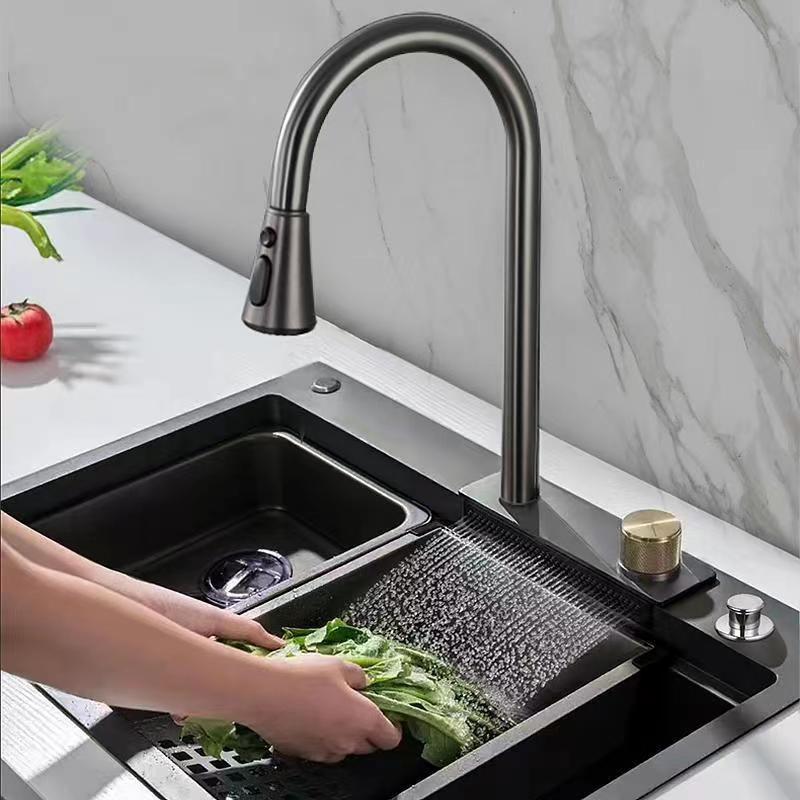
A drinking water faucet is essentially a small, high-precision faucet designed to handle low-pressure, finely filtered water. It usually features a single handle, slender body, and a narrow spout to maintain smooth flow without splashing. The internal pathways are built with materials that ensure the water quality remains uncontaminated from the filtration system to the cup. This is why many households that use RO or UF systems require a dedicated faucet instead of mixing drinking water with tap water from the main kitchen faucet.
Its construction is typically simple in appearance but sophisticated in functionality: smooth internal tubing, food-grade components, and a valve mechanism that ensures the purified water remains clean. FUJIA’s drinking water faucet options emphasize metal purity, enhanced surface treatments, and consistent water delivery, making them a strong companion to modern filtration equipment.
Although small in structure, the performance of a drinking water faucet reflects several critical characteristics:
Because purified water flows at lower pressure than municipal water, the faucet must provide smooth output without sudden bursts or irregular drips. Many FUJIA models incorporate flow-control aerators that maintain a stable stream.
All parts that come into contact with water—spout interior, valve core, tubing—must meet hygienic standards. This prevents any metallic taste or contamination that might compromise filtration quality.
Unlike regular taps, drinking water faucets often handle water with very low mineral content. This prevents scaling but makes material stability important. Stainless steel and lead-free brass are commonly used because they maintain structural integrity without leaching.
Most drinking water faucets use a single-handle or button-style control. This allows quick dispensing without adjusting temperature, since the water comes only at ambient temperature from the filtration system.
As these faucets are often placed beside the main kitchen faucet, aesthetics matter. FUJIA’s designs include slim contours, polished finishes, and coordinated color options that integrate smoothly into different kitchen styles.
While both are faucets, their internal engineering and usage function differ clearly. The following table summarizes the differences:
| Category | Drinking Water Faucet | Standard Kitchen Faucet |
|---|---|---|
| Water Source | Filtered water supply | Regular tap water |
| Water Pressure | Low-pressure compatible | High-pressure municipal |
| Materials | Food-grade, anti-contamination | General-purpose metal |
| Output Function | Room-temperature drinking water | Hot/cold mixing, washing |
| Internal Path | Narrow, hygienic channels | Wide, multi-use channels |
| Installation | Usually auxiliary hole | Main kitchen fixture |
A drinking water faucet is not meant to replace the main kitchen faucet; instead, it complements it by adding safe, purified water access without interfering with everyday kitchen activities. FUJIA's product range is designed with this dual-installation concept in mind.
The usefulness of a drinking water faucet becomes most evident in homes and facilities where clean drinking water is a priority. Typical scenarios include:
A dedicated faucet provides convenience—filtered water for drinking, coffee, and cooking without mixing with dishwashing activities.
Many offices use countertop or under-sink filtration systems. A small drinking faucet provides hygienic dispensing without occupying the main sink.
Specialty drink bars often use purified water to ensure consistent taste in teas, coffees, and blends.
Filtered water is required for preparing solutions or cleaning sensitive equipment.
Children benefit from having clean, safe drinking water separate from general hand-washing areas.
FUJIA’s drinking water faucets offer varied height options, spout curvature, and finishes to match these environments.
No. These faucets are designed for cold purified water. Hot water may damage filtration components upstream and affect water quality.
Most models need an additional small hole on the sink or countertop. FUJIA also supports custom designs for non-standard installations.
Generally yes—most are compatible as long as the connector size matches. FUJIA faucets provide adaptable fittings to suit multiple brands of filters.
No. A good quality faucet ensures the filtered water reaches the user without contamination or pressure loss.
With rust-resistant materials and durable valve cores, high-quality models often last over 10 years.
A drinking water faucet is a compact yet essential fixture for any space that values clean and safe drinking water. By separating purified water from general tap water, it ensures hygiene, convenience, and long-term reliability. Its specialized internal materials, slim design, and low-pressure compatibility distinguish it from a regular kitchen faucet. With refined models such as those offered by FUJIA in the Drinking Water Faucet collection, users can expect smooth operation, elegant design, and dependable performance for years. Whether for a home, office, or commercial kitchen, a dedicated drinking water faucet enhances safety and improves everyday water usage.
Previous: How To Install Wall Mount Faucet
 Mobile Phone:
 Contact Now