

An angle valve is a small but essential control component in residential plumbing, commercial restrooms, industrial water systems, and appliance installations. Its primary purpose is to regulate, restrict, or completely shut off water flow to a specific fixture without affecting the rest of the supply line. Because angle valves sit at the intersection between the main water supply and end-use fixtures—such as faucets, toilets, bidets, washing machines, and water filters—they are designed for reliability, pressure resistance, and precise flow control.
FUJIA manufactures durable and corrosion-resistant Angle Valve products engineered with high-grade brass, precision chrome plating, and smooth control mechanisms to support long-term performance. To fully understand why angle valves play such a critical role in plumbing systems, it is important to explore how they work internally, how their structure influences flow behavior, and how their design supports safe operation.
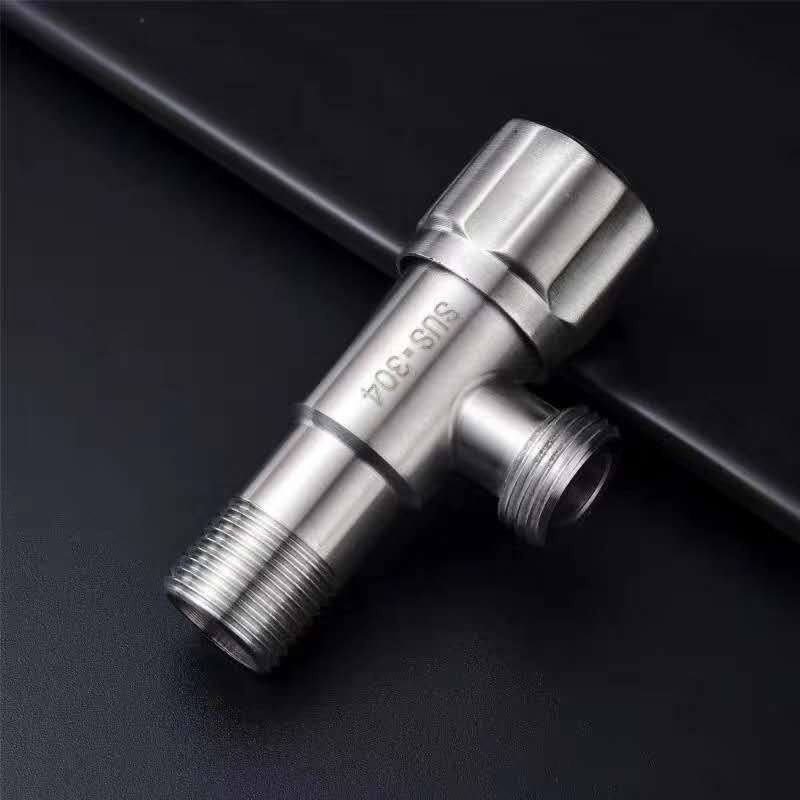
An angle valve gets its name from the 90-degree turn inside its body. While the exterior shape is simple, the internal structure includes multiple functional components that work together to control water flow. The essential parts include:
The inlet port connected to the main supply
The outlet port connected to the fixture
A flow-control stem or spindle
A rubber, ceramic, or metal sealing mechanism
The handle or knob
The body shell, usually brass or stainless steel
A compression nut or threaded connector
These pieces form a compact regulating device that transitions water from a straight supply line into a perpendicular outlet, enabling controlled water distribution in confined installation spaces.
| Component | Function |
|---|---|
| Inlet Port | Receives pressurized water from supply line |
| Outlet Port | Discharges water to the fixture |
| Valve Core | Opens or closes flow passage |
| Stem / Spindle | Transfers handle rotation to valve core |
| Seal | Prevents leaks during shut-off |
| Body | Provides water chamber and structural support |
When the handle turns, the valve core moves vertically or rotationally to open the passage, allowing water to flow through the bent pathway.
The defining characteristic of an angle valve is its curved water channel. The internal pathway forces water to make a 90-degree turn, allowing the valve to change direction of the supply line without additional fittings. This bend also plays a role in flow regulation. As the valve core moves, it opens or restricts the passage at the bend itself.
Because the flow must travel across a controlled restriction point, the valve can finely adjust water volume. The angle structure provides two key benefits:
A compact format for corner or under-sink installations
A natural flow-control point where water speed changes as it turns
When the valve is fully open, water moves through the angled passage with minimal obstruction. When partially closed, the valve core reduces the size of the flow window, lowering pressure and volume before the water reaches the faucet or appliance.
FUJIA’s angle valves are engineered so that even under large pressure variations, the controlled flow through the bent chamber remains stable and smooth.
The actual “working” component inside an angle valve is the valve core. This core may use a rubber washer, stainless steel disc, or ceramic cartridge depending on design. As the handle is rotated, the stem translates rotational motion into vertical lifting or downward compression. The movement adjusts the size of the internal passage.
The process works as follows:
The handle turns in a clockwise or counterclockwise direction.
The stem rotates or threads upward or downward.
The valve core either presses against the seat to stop water or moves away to permit flow.
The water travels around the core, through the bend, and into the outlet port.
Ceramic cores, which rotate rather than compress, provide precise control and long life. Rubber-based designs rely on compression and are generally softer to operate.
| Valve Core Type | Characteristics | Performance |
|---|---|---|
| Rubber Seal | Soft close, low cost | Moderate lifespan |
| Stainless Steel | Durable, simple | Reliable but less precise |
| Ceramic Disc | Smooth control, anti-wear | Longest lifespan |
FUJIA uses high-quality ceramic or brass-based sealing structures to ensure smooth operation and extended durability.
Understanding how angle valves work requires analyzing how pressure behaves inside the chamber. When fully opened, the valve allows water to flow freely with minimal pressure drop. As the valve narrows, water encounters resistance at the core and at the 90-degree bend. This causes:
Reduced downstream pressure
Slower water speed
More controlled output
The valve functions based on the principle of variable aperture. The size of the opening determines the relationship between pressure and flow rate.
When the valve is halfway open, water experiences turbulence as it moves through the restricted section. This turbulence is beneficial when fine-tuning the pressure for sensitive devices like bidets, water filters, and electric heaters.
| Valve Position | Flow Condition | Pressure at Outlet |
|---|---|---|
| Fully Open | Maximum water volume | Highest |
| Half Open | Moderately reduced flow | Medium |
| Slightly Open | Low flow, controlled output | Low |
| Fully Closed | No flow | Zero |
This system allows one plumbing branch to be isolated without shutting off the main water supply in the entire building.
Angle valves are not only flow-control devices—they are also safety and maintenance tools. Their ability to stop water flow at a single point makes repairs or fixture replacements far easier. For example, when servicing a faucet or replacing a toilet fill valve, an angle valve allows the user to shut off water locally while keeping other fixtures functional.
Their compact 90-degree structure makes installation cleaner, especially under sinks, behind toilets, or near wall outlets. Angle valves are frequently used to regulate pressure for appliances sensitive to high flow, such as water purifiers, heaters, or bidet seats.
Allow isolation of individual fixtures during maintenance
Prevent sudden surges from reaching appliances
Serve as a secondary shut-off safety feature
Improve aesthetics by eliminating additional elbows
Provide users with precise control over flow rate
Because FUJIA angle valves are built using corrosion-resistant brass bodies and smooth-turn internal mechanisms, they maintain sealing performance during constant pressure cycles.
Angle valves appear simple, but their internal operation combines fluid mechanics, pressure control, and precision sealing. By using a 90-degree flow path, a movable valve core, and a controlled restriction zone, they regulate water volume effectively and safely. Their compact design allows installers to direct water at right angles while maintaining reliable shut-off capability.
FUJIA’s Angle Valve products are engineered to provide smooth operation, strong pressure tolerance, long-lasting sealing, and corrosion-proof performance. Whether installed in kitchens, bathrooms, commercial sinks, or industrial equipment rooms, a properly functioning angle valve ensures water systems remain safe, controllable, and easy to service.
Angle valves may be small components, but they play a large role in maintaining safe, efficient, and stable plumbing systems—and understanding how they work helps homeowners, plumbers, and facility managers appreciate the precision behind everyday water control.
Previous: How To Unclog A Kitchen Sink
 Mobile Phone:
 Contact Now