

A single handle faucet is designed to control both water flow and temperature with one lever, and its advantages go far beyond simple appearance. In modern kitchens, where efficiency, hygiene, and ease of use matter more than ever, the single handle faucet has become the preferred choice for many households and professional users. Its design directly improves daily routines, reduces unnecessary movements, and creates a cleaner, more adaptable sink environment.
As a manufacturer focused on real-world kitchen use, FUJIA develops single-handle kitchen faucet solutions that emphasize practical comfort, stable control, and long-term reliability. The following sections explain in detail why a single handle faucet offers clear advantages in everyday use.
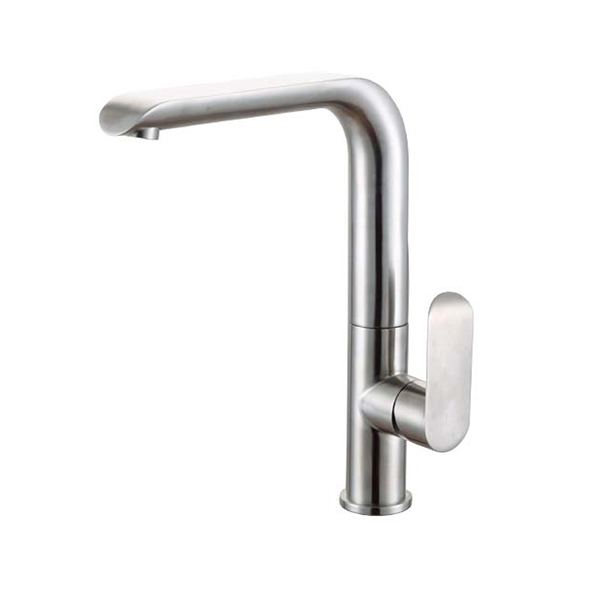
One of the most important advantages of a single handle faucet is the ability to operate it with one hand. In a real kitchen, hands are often wet, dirty, or occupied with cookware, food, or cleaning tools. A single lever allows users to turn the water on or off and adjust temperature with a simple movement of the wrist, forearm, or even the back of the hand.
This one-handed control significantly improves efficiency during repetitive tasks such as rinsing vegetables, washing utensils, or quickly filling containers. Compared with two-handle designs that require separate adjustments, a single handle faucet reduces motion and saves time across dozens of daily interactions at the sink.
A single handle faucet integrates hot and cold water control into one smooth motion. Once users become familiar with the handle’s movement range, they can quickly return to a preferred temperature setting without trial and error.
In practical terms, this means less water wasted while adjusting temperature. Instead of opening one handle, then the other, and waiting for the mix to stabilize, users can reach a comfortable temperature almost immediately. This advantage is especially noticeable in busy kitchens where water is turned on and off frequently for short tasks.
Over time, this intuitive control contributes to a more comfortable and predictable kitchen experience for all users.
Water efficiency is not only about flow restrictors or technical ratings. It is also about how easily users can reach the temperature and flow they want. A single handle faucet supports efficient habits by minimizing the time water runs unnecessarily during adjustment.
Because temperature and flow are adjusted together, users are less likely to leave water running while fine-tuning. In everyday use, this often results in lower overall water consumption compared with setups where two handles must be balanced manually.
In households where multiple people use the kitchen sink throughout the day, this small efficiency gain becomes significant over time.
From a maintenance and hygiene perspective, a single handle faucet has a clear advantage: fewer external components on the sink deck. With only one handle instead of two, there are fewer seams, edges, and base areas where water spots, soap residue, and limescale can accumulate.
This simpler structure makes routine cleaning faster and more effective. Wiping around one handle is easier than cleaning around two, especially in tight spaces or compact sink layouts. In kitchens that prioritize cleanliness and visual order, this difference is noticeable on a daily basis.
A cleaner sink area also contributes to better overall kitchen hygiene, particularly in environments where food preparation is frequent.
Single handle faucets are widely recognized for their accessibility advantages. Users with limited hand strength, reduced mobility, or temporary injuries can operate a single lever more easily than two separate handles.
This design is also more intuitive for children and older users, who may struggle with coordinating hot and cold handles. With a single handle, the learning curve is shorter and the risk of accidentally turning on excessively hot water is reduced when the faucet is properly adjusted.
For households planning for long-term usability or inclusive design, this accessibility advantage is an important consideration.
Single handle faucets are typically designed for single-hole installation, which aligns well with modern sink and countertop designs. This simplifies installation and creates a clean, uncluttered look on the sink deck.
Even in retrofit situations where a sink has multiple holes, a single handle faucet can be installed with a deck plate to cover unused openings. This flexibility allows homeowners and contractors to modernize a kitchen without replacing the entire sink or countertop.
For kitchen upgrades focused on efficiency and appearance, this adaptability makes single handle faucets a practical choice.
A single handle faucet naturally supports a streamlined, modern aesthetic. Its compact control layout pairs well with high-arc spouts, pull-out spray functions, and minimalist kitchen designs.
While style preferences vary, many contemporary kitchens favor clean lines and uncluttered surfaces. A single handle faucet contributes to this visual simplicity without sacrificing functionality.
This design advantage is particularly valuable in open-plan kitchens, where the sink area is visible from living or dining spaces and plays a role in the overall appearance of the home.
From a technical perspective, a single handle faucet centralizes control into one primary mechanism. This often simplifies servicing because temperature and flow behavior are managed within a single control system rather than two independent valves.
When maintenance is required, diagnosing and servicing one control point is usually more straightforward than identifying which handle or valve is responsible for a problem. Over the lifespan of the faucet, this simplicity can reduce downtime and make routine maintenance more predictable.
For users who value long-term reliability and ease of care, this is a practical advantage.
Many modern faucet features are designed around single handle operation. Pull-out and pull-down sprayers, swivel spouts, and integrated spray modes are easier to use when flow and temperature are controlled by one lever.
With a single handle faucet, users can switch spray modes or reposition the spout without constantly re-adjusting temperature. This makes complex kitchen tasks smoother and reduces frustration during extended use.
This compatibility supports the way modern kitchens function, where one faucet often performs multiple roles.
| Aspect | Advantage in Daily Use |
|---|---|
| Operation | One-hand control for flow and temperature |
| Efficiency | Faster adjustment and reduced water waste |
| Cleaning | Fewer exterior parts to maintain |
| Accessibility | Easier use for children and older users |
| Installation | Single-hole compatibility and flexible retrofits |
| Design | Clean, modern appearance |
| Maintenance | Simplified control mechanism |
The true advantage of a single handle faucet lies in how it supports real kitchen behavior. Most kitchen tasks are short, repetitive, and multitasking-oriented. Users need water quickly, at a predictable temperature, without pausing what they are doing.
A single handle faucet aligns with these habits by reducing steps, simplifying control, and keeping the sink area clean and accessible. Over time, these small improvements add up to a noticeably smoother kitchen workflow.
FUJIA designs its single-handle kitchen faucet range with this reality in mind, focusing on stable operation, comfortable handling, and a structure that supports everyday use without unnecessary complexity.
The advantages of a single handle faucet are rooted in practicality. One-handed operation, faster temperature control, reduced water waste, easier cleaning, better accessibility, and simplified installation all contribute to a more efficient and comfortable kitchen experience.
For kitchens that prioritize daily usability and modern design, a single handle faucet offers a clear functional advantage. When designed for durability and smooth control, it becomes a long-term upgrade that improves how the kitchen is used every day.
 Mobile Phone:
 Contact Now