

Measuring for a kitchen sink is not just checking the length and width of the opening. A sink must fit the countertop cutout, clear the cabinet walls, align with plumbing, leave room for faucet mounting, and match the way you plan to install it. Many sink installation problems come from missing one critical dimension such as bowl depth clearance, rear faucet deck space, sink rim overlap, or the cabinet’s internal width after accounting for side panels and support rails.
This guide walks you through a reliable measurement process for top-mount, undermount, and farmhouse apron-front sinks. You will learn what to measure, where to measure from, how to record dimensions, and how to avoid the most common ordering mistakes. If you want to compare sink layouts and configurations while you measure, you can reference FUJIA’s sink category here: kitchen sink.
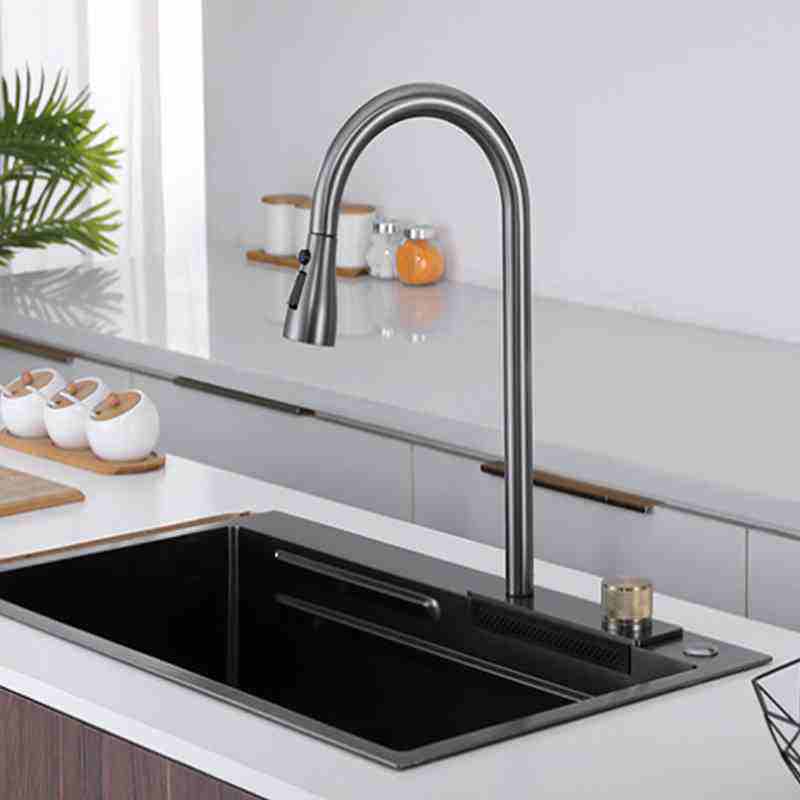
Your measurements must match the installation type because each method uses different reference points and clearance rules.
Common installation types:
Top-mount drop-in sink
The rim sits on the countertop surface. Fit depends on cutout size, rim overlap, and the flatness of the counter around the opening.
Undermount sink
The sink mounts under the countertop. Fit depends on cabinet clearance, countertop thickness, flange size, and the planned reveal style.
Farmhouse apron-front sink
The front apron is visible and often rests against the cabinet face. Fit depends heavily on cabinet modification, apron height, and support structure.
Before measuring, decide which installation type you want, because it determines whether you measure the existing cutout, the cabinet interior, or both.
You can measure most sink requirements with basic tools, but accuracy depends on measuring from the correct surfaces and recording in a consistent unit system.
Recommended tools:
Tape measure with clear markings
Rigid ruler for smaller clearances
Square or straight edge for checking flatness
Pencil and masking tape for marking reference lines
Flashlight for cabinet interior and plumbing inspection
Setup rules that prevent errors:
Use the same unit system for everything, either millimeters or inches.
Measure cabinet interior dimensions at more than one height, because panels and rails can narrow space.
Record the countertop thickness if you are considering undermount installation.
If replacing a sink, measure the existing cutout only after confirming the countertop is not chipped or enlarged from prior work.
Many buyers measure only the countertop opening and ignore the cabinet, then discover the sink does not fit because the bowl hits the cabinet sides or the apron conflicts with the cabinet face.
Measure these cabinet dimensions:
Cabinet interior width
Measure inside left wall to inside right wall, not the external cabinet width. This is critical for sink bowl clearance.
Cabinet interior depth
Measure from the inside front rail to the inside back panel. Include any back braces or service panels that reduce usable depth.
Cabinet height and floor clearance
Measure from the cabinet base to the underside of the countertop. Compare this to the sink depth plus drain assembly and trap height.
Front rail and stretcher positions
Note whether a front rail, center brace, or corner blocks will interfere with the sink bowl or apron.
Plumbing location
Record the drain line position, water supply lines, and any disposal unit space. A deep bowl requires more vertical clearance below.
A practical guideline is to select a sink that fits comfortably inside the cabinet interior with enough side clearance for mounting hardware and maintenance access, rather than forcing a maximum-size sink into a tight space.
Your approach differs based on whether you are replacing an existing sink or preparing a new countertop cutout.
Measure the current cutout and the visible sink rim coverage:
Cutout length and width
Measure the opening at the top surface. Take measurements at multiple points, because some cutouts are not perfectly square.
Rim overlap coverage
If you want a new top-mount sink to cover old silicone lines or stains, you need enough rim overlap. Record the distance from the cutout edge to the outer edge of the existing rim.
Corner radius
Compare the cutout corner radius with the sink’s corner design. A mismatch can require rework.
Faucet hole location
Confirm whether the faucet is deck-mounted on the sink or mounted on the countertop. This affects rear clearance and hole spacing.
For a new cutout, you typically measure the usable countertop space:
Available counter length and depth around the sink area
Confirm you have room for faucet, accessories, and comfortable working space.
Clearance to backsplash and windowsills
Rear clearance affects faucet installation and handle swing, especially for taller faucets.
Countertop thickness
Particularly important for undermount sinks and for ensuring compatibility with mounting hardware and reveal style.
If you are comparing different sink sizes and layouts during planning, browsing a category range can help match measurements to real sink configurations: kitchen sink.
Once you have cabinet and countertop measurements, you need to match them to the sink’s specification dimensions. This is where many selection mistakes happen, because the advertised sink size is not the same as the cutout requirement.
Important sink dimensions:
Overall sink size
The full outer length and width, including rim if top-mount.
Bowl size
Internal bowl length and width, which determines usable washing space.
Bowl depth
Affects splash control and capacity, but also affects cabinet clearance for drain and disposal.
Minimum cabinet size requirement
Many sinks specify a minimum cabinet width. This is usually based on mounting clearance, not just bowl width.
Drain position
Center drain vs rear drain changes plumbing clearance and storage usability in the cabinet.
Faucet deck space or mounting method
Some sinks include a faucet deck with pre-drilled holes. Others require countertop-mounted faucets.
Use a consistent record format so you can compare models quickly.
| Dimension | Measure from | Why it matters |
|---|---|---|
| Cabinet interior width | Inside wall to inside wall | Determines if sink can physically fit |
| Cabinet interior depth | Front rail to back panel | Prevents bowl or drain interference |
| Countertop cutout size | Opening edge to opening edge | Must match template requirements |
| Counter thickness | Top surface to underside | Impacts undermount hardware fit |
| Sink overall size | Outer edge to outer edge | Ensures rim coverage and placement |
| Bowl depth | Rim plane to bowl bottom | Checks drain and trap clearance |
| Drain location | Centerline from back wall | Affects plumbing and cabinet storage |
| Faucet mounting space | Rear deck or counter | Prevents faucet and backsplash conflict |
This table is useful for procurement notes and prevents key details from being missed.
Undermount and farmhouse sinks require additional measurements because they rely on cabinet support and countertop structure differently than top-mount sinks.
Confirm cabinet interior clearance for the bowl and mounting brackets.
Decide reveal style: positive reveal, zero reveal, or negative reveal. This affects cutout size and the visible edge.
Measure countertop thickness and ensure there is enough material for secure mounting.
Plan seam location on stone countertops so the undermount cutout does not weaken narrow strips.
Measure apron height and cabinet opening height.
Confirm cabinet face modifications required for apron fit.
Measure support base space because farmhouse sinks are heavier and need solid support.
Confirm that countertop cutout aligns with apron position so the visible joint remains neat and easy to seal.
In both cases, it is safer to confirm the sink’s cutout template requirements before the countertop is fabricated, because small differences in reveal and corner radius can force expensive changes later.
Most sink fit issues are preventable. These are the measurement errors that cause the highest rate of rework.
Measuring the external cabinet width instead of interior width
Cabinets often have side panels and rails that reduce usable space.
Using the advertised sink size as the cutout size
Product listings often show overall size, not the required opening size.
Ignoring bowl depth clearance for drain and disposal
Deep bowls can conflict with plumbing, especially in smaller base cabinets.
Not accounting for faucet and backsplash clearance
A faucet may not fit or may hit a window ledge if rear space is insufficient.
Missing corner radius compatibility
A squared cutout with a rounded sink corner can require recutting and refinishing.
Failing to confirm installation type early
Switching from top-mount to undermount after countertop fabrication often creates avoidable cost.
A good habit is to measure twice and record everything in a single checklist format before choosing a model.
To measure for a kitchen sink correctly, start from the cabinet interior, because it is the most common limiting factor. Once you confirm interior width, depth, and vertical clearance for the bowl and drain, measure the countertop cutout or available counter space based on the installation type you plan to use. Then match your measurements to sink specifications including overall size, minimum cabinet size, bowl depth, drain location, and faucet mounting requirements.
When these steps are followed in order, you avoid the most common problems such as sinks that cannot fit inside the cabinet, bowls that interfere with plumbing, rims that do not cover old marks, and undermount cutouts that do not match reveal planning. A structured measurement process makes sink selection faster, reduces installation risk, and helps ensure a clean, leak-resistant finish for years of daily kitchen use.
 Mobile Phone:
 Contact Now