

Pull-down and pull-out kitchen faucets both improve daily kitchen efficiency by giving you a flexible spray head, but they solve different problems. The best choice depends on your sink size, cabinet height, cooking habits, and how you typically wash large cookware. A pull-down faucet is often preferred for deep single-bowl sinks and heavy rinsing tasks. A pull-out faucet can be better for compact kitchens, low-clearance spaces, and multi-directional reach around the counter.
This guide breaks down the differences in structure, user experience, spray performance, maintenance, and installation considerations so you can select the most practical option for your kitchen or project. FUJIA manufactures both styles with stable engineering and consistent finishing. Explore the product ranges here: pull-out kitchen faucet and pull-down kitchen faucet.
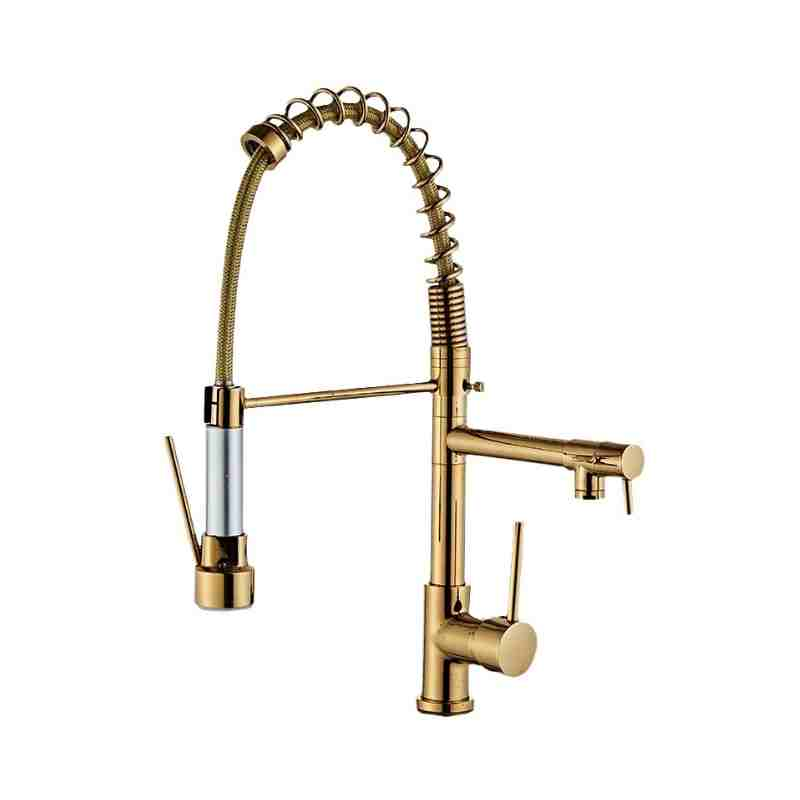
The main difference is not only the shape. It is the hose travel direction and how the spray head is intended to be used.
A pull-down kitchen faucet has a high-arc spout with a spray head that pulls straight down into the sink. The hose is guided by gravity and typically retracts smoothly with a weight. This design prioritizes vertical rinsing power and sink-centered cleaning.
A pull-out kitchen faucet has a shorter spout and the spray head pulls outward toward you. The hose path is more horizontal, giving better reach outside the sink zone. This design prioritizes flexibility for small sinks, side tasks, and countertop reach.
If you rinse most items inside the sink and use a deep basin, pull-down often feels more natural. If you need the spray head to reach beyond the sink, pull-out can be more versatile.
Both styles can handle daily dishwashing, but their ergonomics change how efficiently you complete common tasks.
Pull-down faucet strengths:
Rinsing food residue into a deep sink with a controlled downward angle
Cleaning large pots and baking trays inside a single-bowl sink
Flushing the sink basin quickly with a strong, targeted spray
Keeping water contained in the sink because the spray direction is vertical
Pull-out faucet strengths:
Filling tall containers placed near the sink edge or on the counter
Rinsing vegetables over a colander positioned to the side
Cleaning sink corners in compact basins where the arc is lower
Reaching multiple directions when the sink is small and surrounding space is tight
If your kitchen routine includes frequent wok, stockpot, or sheet-pan cleaning, pull-down often reduces effort. If your routine involves many side tasks around the sink, pull-out often feels easier to aim.
Space is the most practical decision factor. The wrong faucet style can feel awkward even if the product quality is high.
Pull-down is usually the better fit when:
You have a deeper sink bowl, especially single-bowl designs
You have a larger sink deck and enough height clearance
You want a strong vertical rinse for heavy-duty cleaning
Your kitchen layout keeps most washing tasks inside the sink area
Pull-out is usually the better fit when:
You have a smaller sink or shallow basin
You have low overhead cabinets or limited vertical clearance
You need reach for counter tasks near the sink
You prefer a more compact faucet profile for minimal visual impact
A useful checkpoint is cabinet and shelf clearance above the faucet. High-arc pull-down designs need space for the spout and for comfortable spray head handling.
Spray patterns are a major part of user satisfaction. The difference is not only the number of spray modes, but how the modes interact with sink depth and water splash.
Pull-down faucets often support splash control better because the spray head points down into the basin. This matters in shallow sinks where a strong spray can cause rebound splash.
Pull-out faucets can increase splash risk if you frequently pull the spray head outward and angle it back toward the sink. This is not a design flaw. It is a usage pattern difference. In compact kitchens, pull-out is still very practical, but a controlled spray pattern and good water pressure balance become more important.
When comparing models, pay attention to:
Spray head stability when switching modes
Trigger feel and whether it can be used with wet hands
Whether the stream mode stays aerated and consistent
How the spray behaves at typical household pressure levels
For a kitchen with a shallow sink, a pull-down faucet often provides a cleaner, more contained rinse experience.
Both pull-down and pull-out faucets rely on a flexible hose and retraction mechanism. Long-term performance depends on hose quality, connector stability, and how smoothly the spray head returns to dock.
What matters for durability in both styles:
Smooth hose movement that does not kink under normal use
Strong docking that keeps the spray head aligned
Stable connectors that resist leakage over time
A retraction system that remains consistent after repeated cycles
Pull-down designs typically use gravity weights to retract. If the under-sink cabinet is crowded, the weight can bump into cleaning supplies, reducing smooth retraction. Good installation planning solves this.
Pull-out designs often have a shorter hose path, which can reduce interference in very tight cabinets. However, the hose may experience more sideways bending because it is pulled outward more often, so hose quality is essential.
If you are planning multiple installations in a project, evaluate cabinet space under the sink and standardize a hose routing approach to reduce service calls later.
Many faucet complaints come from installation constraints rather than the faucet itself. Choosing the right style should include a quick installation reality check.
Key installation points:
Confirm faucet hole compatibility with your sink and deck thickness
Verify clearance for the spout arc and handle operation
Plan the under-sink hose path so it moves freely
Ensure the weight or guide does not hit plumbing or stored items
Check that shut-off valves and water lines allow stress-free connection
Pull-down faucets benefit from a clear vertical space under the sink for smooth weight travel. Pull-out faucets benefit from a smooth horizontal path that avoids sharp bends.
A good installation plan ensures the spray head docks correctly and returns smoothly, which is central to user satisfaction.
| Decision Factor | Pull-Down Kitchen Faucet | Pull-Out Kitchen Faucet |
|---|---|---|
| Best for sink type | Deep single-bowl, large basins | Small sinks, shallow basins |
| Best for tasks | Heavy rinsing, cookware washing | Side reach, counter tasks, flexible aiming |
| Splash control | Often better due to downward spray | Depends on angle and sink depth |
| Space needs | Needs vertical clearance | Works well with low clearance |
| Under-sink space | Needs clear path for weight | Often easier in tight cabinets |
| Common preference | Modern high-arc kitchens | Compact kitchens and multi-direction use |
This table helps you choose based on practical conditions rather than appearance alone.
FUJIA manufactures pull-out and pull-down kitchen faucets with consistent engineering and stable finishing, supporting both residential kitchens and large-scale supply needs. For a distributor or project buyer, product consistency across batches matters as much as the design style. FUJIA focuses on dependable component matching, smooth spray head control, and stable hose performance so the faucet experience stays consistent after long-term use.
Explore FUJIA product options here: pull-out kitchen faucet and pull-down kitchen faucet.
Pull-down and pull-out kitchen faucets are both excellent upgrades, but the better choice depends on your kitchen layout and daily tasks. Pull-down faucets usually perform best for deep sinks and heavy rinsing because the spray works vertically and stays contained. Pull-out faucets often fit compact kitchens better because the spray head reaches outward and works well in low-clearance spaces.
If you select the style that matches your sink depth, clearance, and cabinet conditions, you will get smoother operation, less splash, and a more efficient kitchen workflow.
 Mobile Phone:
 Contact Now