

kitchen faucet trends are moving in two directions at the same time: cleaner design on the outside and more capability on the inside. Buyers want faucets that look minimal and premium, but they also expect easier cleaning, faster workflow at the sink, and better control of water use. As a result, today’s popular faucet upgrades are less about decoration and more about daily performance, finish durability, and how well the faucet pairs with the sink, accessories, and layout.
This guide breaks down the most current kitchen faucet trends that designers, contractors, and homeowners are choosing for new kitchens and remodels. FUJIA offers integrated sink and faucet solutions that match these priorities. You can view the collection here: kitchen faucet solutions.
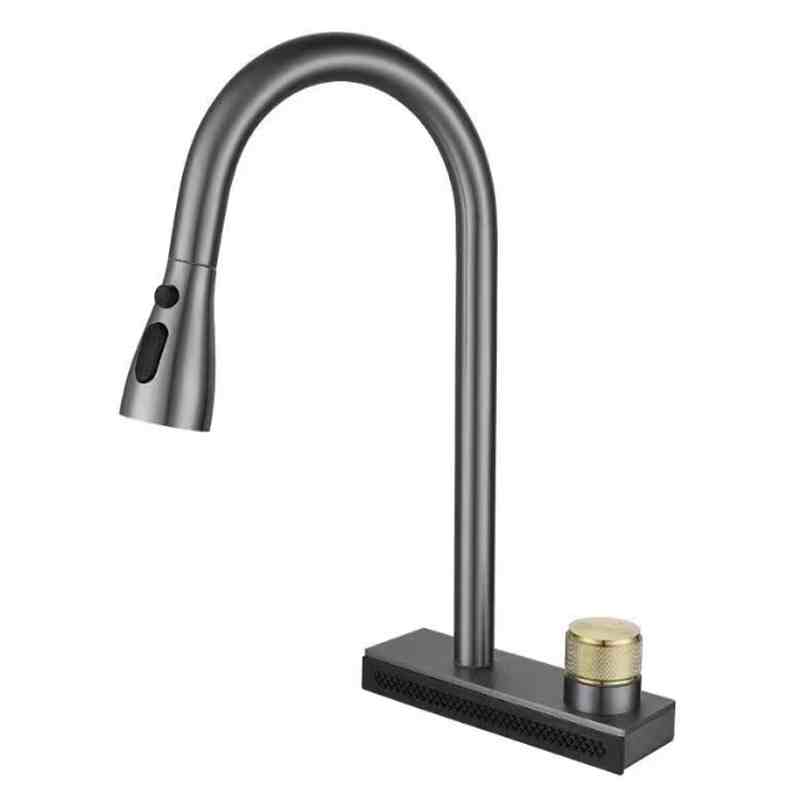
One of the strongest trends is reducing how often you need to touch the faucet body during cooking and cleaning. Touchless activation and other low-contact controls are popular because they keep the handle cleaner when hands are wet, oily, or covered in food prep residue. This trend is especially noticeable in households that cook frequently and in high-use kitchens where hygiene routines are strict.
What buyers typically look for in low-contact control:
Reliable activation without accidental triggering during normal sink movement
Smooth manual override so the faucet still works like a standard single-handle unit
Stable temperature setting behavior so water does not swing hot and cold during repeated use
Easy-to-clean surfaces around the spout base and handle area
Industry trend reports and show coverage frequently highlight hands-free operation and easier hygiene as a major direction for faucet development.
Pull-down designs continue to dominate modern kitchens because they fit how people use a sink: rinse, wash, flush debris, and clean large cookware. The new part of the trend is refinement. Buyers are paying more attention to spray quality and control rather than simply having a pull-down head.
Common upgrades people now expect:
A steady aerated stream that does not splatter under normal household pressure
A concentrated rinse mode that clears food quickly without overspray
A wider spray that speeds up basin rinse-down
Consistent dock alignment so the head returns cleanly without needing two hands
This is also why many spec sheets and project requirements emphasize docking stability and day-to-day usability, not only appearance.
Another clear direction is drinking-water confidence built into the sink zone. More kitchens are treating the faucet area as a water management hub: cooking water, rinse water, and filtered water planning in one place. Some markets prefer a separate filtered-water spout, while others prefer under-sink systems paired with a main faucet workflow.
Why this trend keeps growing:
Households want fewer countertop appliances and fewer separate dispensers
Users want a simpler routine for cooking water and beverage water
Renovations often prioritize cleaner counters and fewer visible accessories
Major kitchen and bath trend coverage points to filtration and water quality features as a continuing focus for new product development.
Finishes are not only about style. They are also about maintenance and how well the faucet hides fingerprints, water spots, and micro-scratches.
Current finish movement includes:
Matte black staying popular for strong contrast against light counters and white cabinetry
Warm gold tones remaining a premium choice in many design-forward kitchens
Polished chrome and brushed nickel gaining renewed attention as a cleaner, brighter alternative to warmer brass-heavy palettes
If the kitchen already uses stainless appliances and neutral hardware, brushed nickel and satin metallic finishes can create a consistent, calm look. Trend reporting for 2026 highlights a shift toward chrome and brushed nickel while still keeping warmer metals relevant in the right spaces.
Faucet trends are increasingly shaped by sink trends. As more kitchens adopt deeper single bowls, ledge-style workstation sinks, and accessory-driven sink layouts, buyers choose faucets that match those workflows.
What changes when the sink becomes a workstation:
Taller spouts and better clearance become more important for large cookware
Spray reach matters for rinsing cutting boards, colanders, and sink accessories
Spout swivel smoothness matters more because users work across multiple zones
Docking reliability matters because the spray head is used more often
This is why many buyers shop sinks and faucets together rather than separately. FUJIA’s category approach supports that planning by offering coordinated options in the kitchen sink solutions range.
Water efficiency is no longer a niche preference. Many buyers expect kitchens to meet water-saving standards while still delivering a strong, usable stream. Instead of accepting a weak faucet, buyers look for better aeration and spray design that feels powerful at lower flow.
A practical reference point used in parts of the US market is a maximum standard flow rate of 1.8 gallons per minute for kitchen faucets in retail channels, which has pushed product development toward efficient aerators and better spray engineering.
What buyers should evaluate in water efficiency:
Whether the stream stays stable at typical home pressure variations
Whether spray modes remain useful instead of misting or splashing
Whether the faucet feels responsive at low flow settings for tasks like rinsing produce
As kitchens become more expensive to remodel, buyers expect hardware to last longer with fewer service issues. This pushes demand toward stronger internal parts, smoother cartridges, reliable diverters, and stable hose systems that do not kink or retract poorly.
What people now notice quickly in daily use:
Handle movement that stays smooth instead of becoming stiff
Spray head hoses that retract consistently even after cabinet storage changes
Docking that stays aligned rather than drifting or loosening
Finishes that tolerate frequent wiping without dulling unevenly
For multi-unit projects, this matters even more because maintenance cost scales fast. Many project specifications prioritize repeatable quality and stable performance across batches.
FUJIA aligns with modern faucet trends by focusing on practical performance features, finish consistency, and coordinated sink-area solutions. Instead of treating the faucet as a standalone item, FUJIA supports a sink-zone approach where spout height, swivel range, spray functionality, and finish selection are planned together with the sink layout. This makes it easier to specify a consistent look and workflow across different kitchen styles.
For wholesale sourcing and repeat projects, consistent specifications and stable product matching reduce installation variation and help keep the final kitchen look uniform. Explore FUJIA’s range here: kitchen faucet solutions.
The newest kitchen faucet trends prioritize cleaner operation, smarter sink workflows, and finishes that look premium while staying easy to maintain. Low-contact control, refined pull-down performance, integrated filtration planning, coordinated sink setups, and water-efficient engineering are shaping current buyer expectations. Finish direction remains diverse, with matte black and warm gold still strong, while chrome and brushed nickel are returning as modern, bright options.
If you choose a faucet based on how your sink area is actually used and match it with the right sink layout, you get a kitchen upgrade that looks current and performs better every day.
 Mobile Phone:
 Contact Now