

Replacing a kitchen faucet with a sprayer is one of the most practical upgrades you can do in a kitchen. A pull-out or pull-down sprayer faucet improves reach for rinsing large cookware, makes sink cleaning faster, and often solves common issues found in older faucets such as leaks around the base, weak flow, or a stiff handle. The job is very manageable with basic tools, but success depends on careful prep under the sink, correct hose routing, and leak-free connections. This guide explains the full replacement process from removal to final testing, with special attention to sprayer hose installation and smooth retraction.
FUJIA manufactures pull-out kitchen faucets designed for daily use and reliable operation. You can review options and specifications on our pull-out kitchen faucet page.
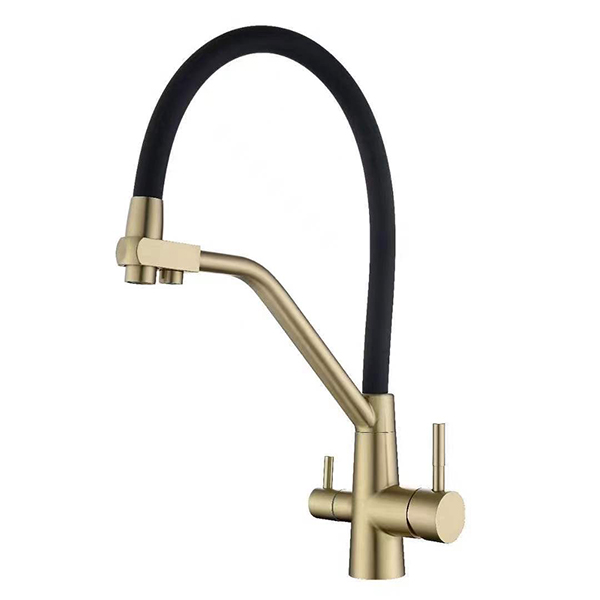
Before you remove the old faucet, take a few minutes to understand your current setup. Most kitchens have either a single-hole or three-hole sink or countertop cutout. A modern sprayer faucet might be a single-handle, single-hole design, or it might include an escutcheon plate to cover extra holes. Also check the shutoff valves under the sink and the type of supply lines. Many older installations use rigid tubing or older braided lines, while newer systems commonly use flexible braided hoses with 3/8 inch compression fittings.
You should also check clearance behind the sink. Pull-out faucets need space for the hose loop and the counterweight to move freely. Crowded cabinets with filters, garbage disposals, or pull-out drawers sometimes require extra planning to prevent the hose from snagging.
You can complete most replacements with standard tools. A basin wrench helps reach mounting nuts behind the sink. Adjustable wrenches or open-end wrenches are needed for shutoff valve connections. A bucket, towel, and flashlight are essential because water remaining in lines will drip during removal. Most new sprayer faucets include the necessary hoses and mounting hardware, but you may need a few extras depending on your plumbing condition.
Commonly needed items include:
Basin wrench and adjustable wrench
Screwdriver for brackets or escutcheon plate screws
Plumber’s putty or silicone if required by your sink surface and faucet base design
New braided supply lines if existing lines are worn, too short, or corroded
PTFE thread tape only when the fitting type specifically requires it
Many compression fittings seal by design without tape. Using tape incorrectly can cause cross-threading or poor sealing, so match seal method to the fitting style.
Turn off both shutoff valves under the sink. Rotate clockwise until they stop. Open the faucet above to release pressure and drain the remaining water from the lines. If the shutoff valves are stiff or do not fully stop water, you should fix or replace them before installing the new faucet. A faucet replacement is not complete if the shutoff valves cannot isolate water reliably.
Place a bucket under the valves and disconnect the supply lines slowly. Expect a small amount of water to drain from each line.
Most older faucets are held by a mounting nut or bracket under the sink. Use a flashlight to locate the hardware. If there is heavy mineral buildup or corrosion, spray a penetrating lubricant and wait a few minutes. Loosen the mounting nut with a basin wrench and remove any brackets or washers. Once the hardware is free, the faucet will lift out from above the sink.
If your old setup includes a separate side sprayer, disconnect its hose under the sink. Some older systems route the sprayer hose through the faucet body or through a diverter. Remove all components so the new faucet area is clear.
After removal, clean the sink surface thoroughly. Old putty, silicone, and mineral deposits can prevent the new faucet base from sealing properly. A clean, flat surface is the foundation of a leak-free installation.
Before installing the new faucet, confirm the hole configuration matches the faucet design. Many sprayer faucets are designed for a single main hole, with an optional deck plate to cover extra holes. If your sink has three holes but your faucet uses one hole, use the deck plate to achieve a finished look and prevent water from entering unused openings.
The table below is a quick guide to common layouts:
| Sink Hole Layout | Common Faucet Fit | What To Confirm Before Installing |
|---|---|---|
| Single-hole | Most pull-out faucets | Base gasket coverage and stability |
| Three-hole | Pull-out faucet with deck plate | Plate length covers unused holes |
| Four-hole | Faucet plus accessories | Decide whether to keep dispenser or cover hole |
For stone or composite sinks, follow surface sealing recommendations carefully, since some materials do not work well with traditional putty.
Feed the faucet hoses through the sink hole from above. If the faucet uses a base gasket, ensure it sits flat and aligned. If the installation calls for sealant, apply it evenly and keep it away from hose openings. Lower the faucet into position and align it straight relative to the sink.
Under the sink, install the mounting bracket and nut. Tighten gradually while checking alignment above. Do not fully tighten from below without verifying the faucet is centered and straight. Once the faucet is correctly aligned, tighten firmly to prevent movement, but avoid over-torque that can crack a sink or deform a gasket.
Connect the hot and cold supply lines to the shutoff valves. Most modern pull-out faucets use flexible braided hoses with standard compression fittings. Tighten connections securely with a wrench while holding the valve steady, but do not overtighten. Over-tightening can damage washers or deform compression seals.
If your shutoff valves are 1/2 inch and the faucet lines are 3/8 inch, you need the correct adapters. Using the wrong adapter or forcing threads is a common cause of persistent leaks.
The sprayer function depends on correct hose routing and weight placement. Pull the sprayer hose down under the sink and ensure it forms a smooth loop without sharp bends. The loop needs room to move as you pull and retract the spray head.
Install the counterweight at the position specified by the faucet instructions. The weight should sit on the straight section of the hose, not on a kink or connector. A poorly placed weight can cause slow retraction or hose wear over time. After weight installation, pull the sprayer head out and let it retract several times. Watch under the sink to confirm the hose does not rub against sharp cabinet edges or get caught on plumbing lines.
If your cabinet has a pull-out trash bin or moving drawer hardware, route the hose away from moving parts. A smooth path is essential for long-term sprayer performance.
Before you use the faucet normally, flush the system. Remove the aerator from the spray head if your design allows it. Turn on the water slowly and check all connections under the sink. Run cold water first, then hot water, and let each run for a minute to clear debris. Flushing protects the cartridge and helps prevent early clogging.
Inspect:
Supply line connections at shutoff valves
Connections at the faucet body
Sprayer hose connectors
Any tee fittings or adapters used
If you see a slow drip, turn off water and tighten slightly. If the leak continues, check for cross-threading or missing washers.
If the sprayer does not retract smoothly, the hose is usually rubbing on an object or the counterweight is mispositioned. Re-route the hose and confirm the loop is free. If water pressure is low, debris may be trapped in the aerator or spray head screen; flushing and cleaning usually solves it. If the faucet handle feels stiff or inconsistent, confirm that supply lines are not twisted and that shutoff valves are fully open. A twisted supply line can transmit tension into the faucet body and create unusual handle feel.
A small amount of noise during first use can occur as air exits the lines, but persistent hammering suggests a plumbing issue that should be addressed separately.
Replacing a kitchen faucet with a sprayer is a practical upgrade that improves daily washing and cleaning efficiency. The key steps are shutting off water safely, removing the old faucet without damaging the sink surface, installing the new faucet body with correct alignment, connecting supply lines with the right fittings, and routing the sprayer hose with proper counterweight placement for smooth retraction. Careful flushing and leak checks at the end protect the new faucet and confirm reliable operation from day one.
If you are selecting a pull-out kitchen faucet for a renovation, rental upgrade, or long-term supply plan, FUJIA can help you choose the right configuration and finish for your sink layout and usage needs. Visit our pull-out kitchen faucet page and share your sink hole setup, preferred handle style, and installation conditions. Our team can provide practical guidance and product support to help you complete installation smoothly and achieve stable, leak-free performance.
 Mobile Phone:
 Contact Now