

A dripping kitchen faucet is more than an annoyance. Over time, a slow drip can stain sinks, accelerate limescale buildup, and signal wear inside the valve body that may worsen into a larger leak. The good news is that most drip problems follow a predictable pattern. If you identify where the water is coming from and match the repair to the faucet’s internal structure, you can often restore a tight seal without replacing the entire unit. This guide covers practical fixes for the most common kitchen faucet designs, with clear steps and checks that help you avoid repeat leaks.
If you are maintaining or upgrading fixtures for long-term reliability, FUJIA offers durable options such as a stainless steel kitchen faucet designed for daily use and easier upkeep. You can view models and configurations on our Stainless Steel Kitchen Faucet page.
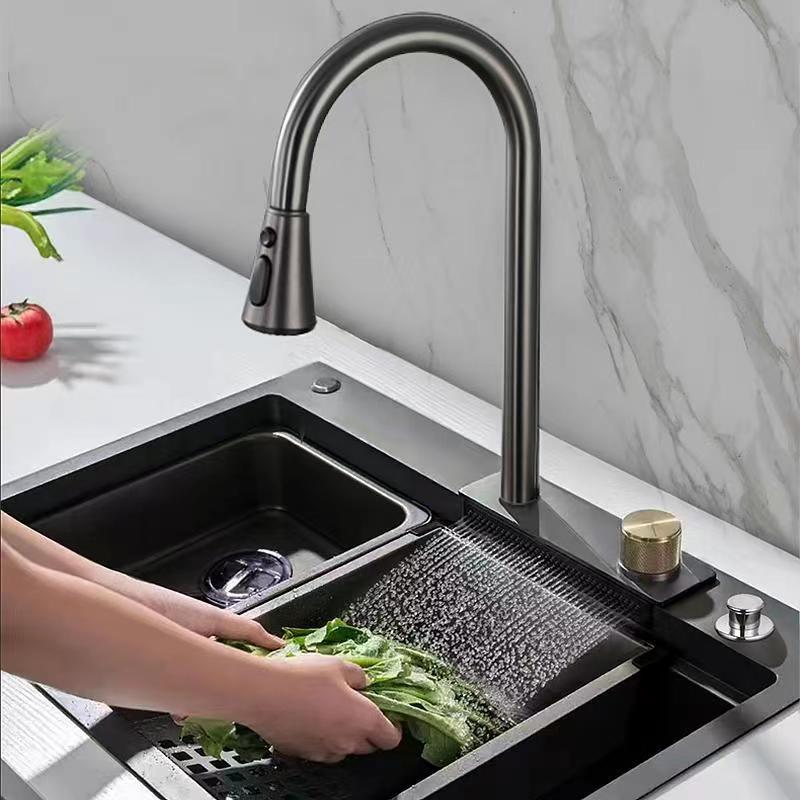
Before you take anything apart, confirm the drip location because it determines what to repair. A drip from the spout when the handle is fully off usually points to a worn cartridge, valve seat, or internal seal. Water around the handle or base often indicates an O-ring or packing seal issue. Drips under the sink are more commonly caused by loose supply connections or a failing braided hose.
Run this quick check with the faucet off:
Watch the spout tip for steady dripping versus intermittent drops.
Dry the handle area and base, then check again after a few minutes.
Inspect under the sink with a flashlight for moisture at connections.
This small diagnosis step saves time because it prevents you from replacing the wrong part.
Turn off the hot and cold shutoff valves under the sink, then open the faucet to relieve pressure. Plug the sink drain so small screws do not fall into the trap. Keep a towel and a small container nearby for parts. If your water is hard and fittings are mineral-locked, a mild penetrating lubricant helps with stubborn nuts, but keep it off visible finishes.
Most drip repairs require basic tools: a screwdriver, adjustable wrench, and sometimes an Allen key for set-screw handles. A strap wrench can help remove smooth trim rings without scratching.
A dripping faucet kitchen repair depends on the valve type inside the handle. Most kitchen faucets fall into four groups:
Single-handle cartridge faucet
Two-handle ceramic disc faucet
Compression faucet with rubber washers
Ball-type faucet in older single-handle designs
If you are not sure, remove the handle and look at what is underneath. Cartridges and ceramic disc valves are common in modern faucets, while compression designs are more typical in older fixtures.
For a single-handle faucet, the most common cause of spout dripping is a worn cartridge or debris preventing a complete seal. After shutting off water, remove the handle by loosening the set screw or removing the top cap and screw. Lift off any trim, then remove the retaining nut or clip holding the cartridge.
Pull the cartridge straight out. If it resists, rock it gently rather than forcing sideways, since the valve body can be damaged by prying. Inspect the cartridge seals for cuts, flattening, or mineral crust. If the cartridge looks intact, rinse the valve cavity to remove grit that can keep the valve slightly open. Reinstall the cartridge in the same orientation and tighten the retaining nut evenly.
If the drip continues after cleaning, replacement is usually the correct fix. Cartridges wear gradually, and a new cartridge restores the sealing surfaces that stop spout dripping. This is also the step that provides the most reliable long-term result for modern faucets.
Ceramic disc faucets are known for smooth operation, but they can still drip if sediment scratches the discs or if seals degrade. Remove the handle, then unscrew the valve housing to access the ceramic disc cartridge. Clean any mineral buildup and flush the body. Carefully inspect for grit, because tiny particles are enough to prevent full shutoff.
If cleaning does not solve the drip, replace the ceramic disc cartridge. Disc cartridges are not designed for rebuilding, and reusing a scratched disc often leads to recurring leakage.
Compression faucets use a rubber washer pressed against a valve seat. Dripping usually occurs when the washer hardens, cracks, or the seat becomes rough. Remove the handle, then remove the stem assembly. Replace the rubber washer at the bottom of the stem and check the O-ring along the stem for wear.
If the valve seat inside the faucet body is pitted, a new washer will not seal well. In that case, resurfacing or replacing the seat is needed to stop the drip permanently. Compression systems can be very repairable, but the valve seat condition determines whether the fix holds.
If water appears around the handle or the base plate rather than the spout, focus on O-rings and seals. Handle leaks often come from a worn stem O-ring or packing seal. Base leaks may come from a degraded base gasket or loose mounting hardware that allows water to slip under the escutcheon.
Disassemble to the leaking area, replace O-rings with the correct size, and apply a thin coat of silicone plumber’s grease to improve sealing and reduce wear. Avoid petroleum grease because it can damage certain rubber materials. Reassemble carefully and do not over-tighten, because excessive force can distort gaskets and create new seep paths.
Some “drips” are actually slow seepage from supply connections that runs along hoses and drips at a low point. Dry the connections, then wrap a tissue around each joint to detect fresh moisture.
Common fixes include tightening compression nuts slightly and confirming that washers are seated correctly. If a braided supply line shows corrosion, kinks, or bulges, replacement is the safer option. A supply line failure can create sudden flooding, so treat worn hoses as a priority repair.
After reassembly, turn water back on slowly and keep the cabinet open during testing. Run both hot and cold water for a minute to flush debris that could damage new seals. Then close the faucet and watch the spout for at least two minutes. Some residual water in the spout may drip once or twice, but continuous dripping indicates the valve is still not sealing.
Use this checklist before you finish:
No dripping from the spout after the initial drain-off
No moisture around the handle and base
No under-sink seepage at supply connections
Smooth handle movement without grinding or sticking
If the valve body is heavily corroded, replacement can be the more reliable path. The same applies if parts are not available or if repeated repairs do not stop the drip. Upgrading to a quality faucet with stable materials and serviceable internal components reduces maintenance time over the life of the installation.
For kitchens that prioritize durability and easy cleaning, FUJIA’s Stainless Steel Kitchen Faucet range offers practical configurations for long-term use.
To fix a dripping kitchen faucet, start by identifying where the water is leaking, then match the repair to your faucet type. Cartridge and ceramic disc faucets usually stop dripping after cleaning and cartridge replacement. Compression faucets often need a new washer and a sound valve seat to seal properly. Leaks around the handle or base are typically solved by replacing O-rings and restoring gasket contact. After any repair, flush the lines and test both the spout and under-sink connections to confirm the drip is fully resolved.
If you are troubleshooting a persistent leak or planning a fixture upgrade, contact FUJIA with your faucet type, photos of the handle and valve, and your installation setup. We can provide practical guidance and product recommendations to help you achieve a stable, leak-free kitchen system.
 Mobile Phone:
 Contact Now