

When people search how much to replace kitchen faucet, they are usually thinking about labor cost, product cost, and whether the next faucet will last long enough to make the replacement worthwhile. That is why the real discussion is not only about installation fees. It is also about choosing a faucet that reduces future maintenance, fits the space well, and gives buyers a cleaner product strategy from the start.
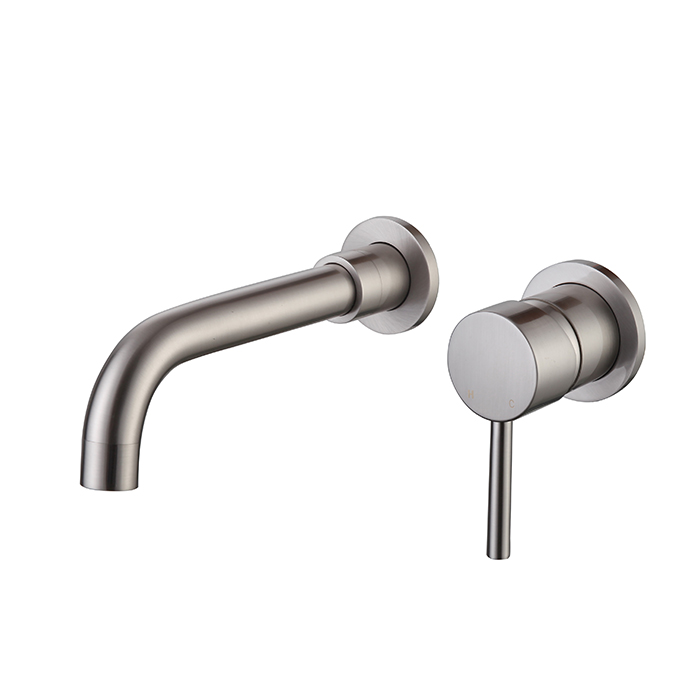
For buyers comparing options for residential projects, apartment programs, or resale channels, a wall-mounted faucet can be part of that answer. The model linked here is a single handle wall-mounted faucet made with SUS304 stainless steel and DR brass, offered in multiple finishes and designed with 180° and 360° spout swivel options. While many searches focus on replacing a standard deck-mounted kitchen faucet, this type of product shows why some buyers choose to upgrade the whole faucet approach instead of simply swapping one low-value item for another.
The total cost to replace a kitchen faucet usually comes from three parts: the faucet itself, the installation method, and the long-term reliability of the product chosen. A low initial price may look attractive, but if the finish wears quickly, the cartridge performs poorly, or the faucet does not match the real installation needs, the replacement ends up costing more over time.
This matters even more for B-end buyers. Importers, distributors, and project purchasers do not only think about one installation. They think about repeat orders, complaint rates, and whether a faucet line is easy to position in the market. A faucet that looks acceptable in a sample but causes maintenance issues later can create extra cost far beyond the original purchase price.
A common mistake is to focus only on the question how much to replace kitchen faucet without asking whether the next faucet is actually a better fit. In many projects, replacement becomes necessary not simply because the old faucet failed, but because the original product was not well matched to the use environment.
A stronger faucet specification can change that. This model uses SUS304 stainless steel and DR brass, passes 0.6 MPa air pressure testing, 1.0 MPa water pressure testing, and has passed a 24-hour salt spray test. For buyers, those details matter because they point to a more stable structure, better sealing performance, and more reliable surface durability in wet environments. If a replacement project is already happening, it often makes more sense to move toward a better-built faucet rather than repeat the same low-spec purchasing decision.
Not every replacement project has to end with another traditional deck-mounted faucet. In some kitchens, apartments, farmhouse layouts, and RV applications, a wall-mounted design can offer a cleaner visual line and more usable sink-area space. This product is listed for kitchen, farmhouse, apartment, and RV use, which makes it easier for buyers to position across several markets rather than treating it as a narrow specialty item.
That shift can also make commercial sense. When a buyer is already dealing with replacement cost, choosing a product with broader appeal and stronger finish options may support better resale value. This faucet is available in finishes such as brushed, Chrome, Brushed Nickel, Matte Black, Gunmetal, Rose Gold, Brushed Rose Gold, Brushed Gold, and Gold, giving distributors and project buyers more flexibility when matching different interior styles.
The cheapest faucet is not always the lowest-cost replacement. Hidden cost often shows up later through inconsistent finishes, weak cartridges, limited rotation, or products that feel too basic for the target market. A replacement that leads to callbacks, user complaints, or another changeout in a short time is rarely a good buy.
This is where more thoughtful product selection matters. The linked wall-mounted faucet supports custom laser logos on the handle or body, customer-based choices for aerator and cartridge, and left-right temperature control. For B-end buyers, these are not small details. They make the product easier to fit into private-label programs, regional market preferences, and broader product lines without starting from a full custom development process.
A better way to read the question how much to replace kitchen faucet is this: how much should I spend to avoid another replacement too soon. That changes the decision from a short-term expense into a product strategy.
For distributors and wholesalers, value comes from product stability and market fit. For project buyers, value comes from easier specification, cleaner installation logic, and lower service pressure later. For retailers, value comes from offering a faucet that looks modern, feels durable, and gives customers more confidence at the point of sale. A wall-mounted faucet with tested pressure performance, flexible finish options, and wider spout movement can support all three goals better than a basic low-end alternative.
The title asks about replacement cost, but replacement decisions are rarely only about numbers. They are about what the buyer gets after paying that cost. This is why the linked product fits naturally into the discussion. It offers a modern wall-mounted option with single-hole installation, 50 cm installation readiness, and 180° or 360° swivel degree, which gives buyers a more flexible path when planning a kitchen upgrade or selecting a faucet line for resale.
Instead of treating replacement as a simple maintenance expense, buyers can use it as a chance to move into a better category. That is especially true in markets where visual finish, cleaner layout, and more durable material are already influencing purchase decisions.
So, how much to replace kitchen faucet? The real answer depends on more than labor and unit price. It depends on whether the new faucet solves the old problems, suits the installation space, and offers enough quality to justify the change.
A wall-mounted faucet like this can make more sense for buyers who want a cleaner look, stronger material structure, and better long-term product value instead of another basic replacement. If you are comparing replacement options, planning a kitchen hardware line, or trying to choose the right faucet for your project, feel free to contact us. We can help review specifications, finish choices, and application needs so you can make a more confident selection.
 Mobile Phone:
 Contact Now