

The standard service life of a commercial-grade stainless steel angle valve is not defined by one simple number alone. In real projects, it depends on material quality, water conditions, installation quality, pressure stability, and how often the valve is opened and closed. In most commercial and residential plumbing systems, buyers expect a good angle valve to remain stable for many years without leakage, flow problems, or visible corrosion. That expectation is reasonable, but only when the product is selected correctly and the supply quality stays consistent.
This is why professional buyers no longer look at angle valves as low-value accessories. In apartments, hotels, bathrooms, kitchens, and renovation projects, the angle valve is a small part that protects the whole water connection point. If it fails early, the result is not a minor inconvenience. It can mean leakage risk, wall damage, maintenance calls, and customer complaints. That is why service life matters so much in commercial-grade supply.
Our stainless steel angle valve fits naturally into this discussion because buyers are often comparing not only appearance or price, but also how long the valve can perform reliably in actual installation conditions.
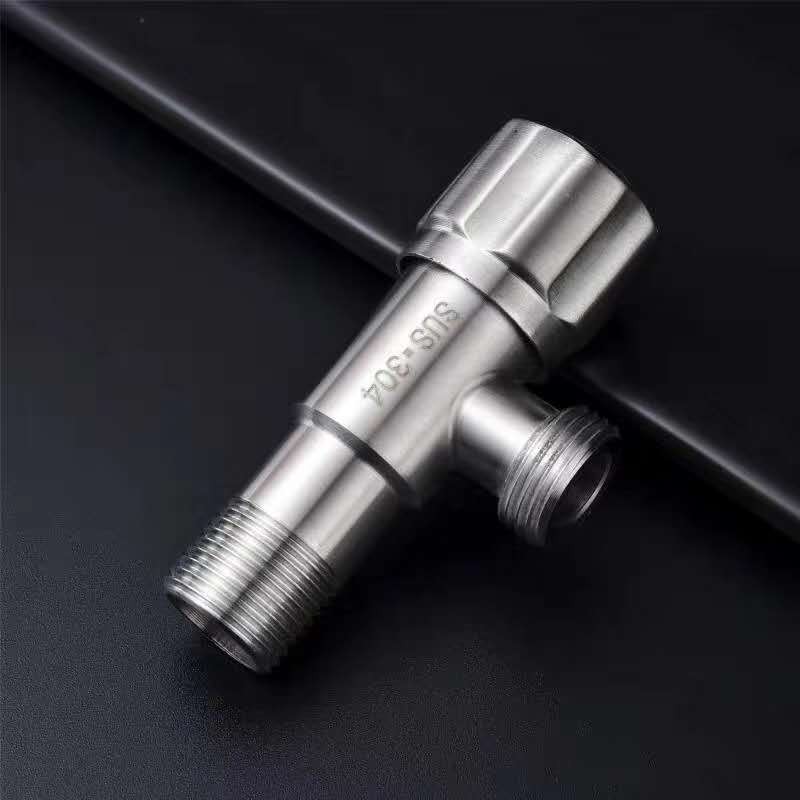
An angle valve sits in a quiet position, but it plays an important role in daily plumbing control. It regulates water supply to faucets, basins, toilets, and similar fixtures while also making later maintenance easier. When the valve performs well, people rarely think about it. When it starts leaking, sticking, or corroding, it quickly becomes a costly problem.
This is especially important in commercial or project-based supply. A single failed valve in a private home is one repair. The same issue across dozens or hundreds of installed units becomes a serious after-sales problem. That is why distributors, contractors, and project buyers usually care more about stable service life than about the lowest starting price.
A long service life helps reduce maintenance frequency, lowers replacement cost, and improves the reliability of the full plumbing system. For B2B customers, this directly affects project reputation and repeat business.
In the market, a commercial-grade stainless steel angle valve is generally expected to provide many years of normal service when the material is correct and the installation environment is reasonable. The exact number varies because real usage conditions vary. A valve used in a clean, stable, moderate-pressure water system will often last much longer than one working under hard water, pressure fluctuation, or poor installation conditions.
So the better way to understand standard service life is not to ask for one fixed number only. It is to ask whether the valve can maintain sealing reliability, corrosion resistance, smooth operation, and stable flow control over the long term. That is what commercial buyers are really paying for.
Our product is positioned in that direction. It uses stainless steel and brass-based material combination, supports pressure testing, and is intended for multiple daily-use environments. These factors are more useful in judging long-term service value than a simple catalog promise alone.
The first factor behind service life is material. A valve may look similar from the outside, but internal and external material quality make a major difference once the product is exposed to water, pressure, and repeated use. Commercial buyers usually prefer stainless steel because it offers better resistance to corrosion, staining, and long-term surface deterioration compared with lower-grade alternatives.
Our angle valve uses SUS304 together with DR brass in its material setup, which gives buyers a stronger basis for durability and daily plumbing use. This combination matters because service life is not only about the body staying intact. It is also about threads, sealing contact, valve movement, and surface stability remaining dependable over time.
In practical sourcing, this is one of the clearest dividing lines between a valve that lasts and a valve that becomes a maintenance issue too early.
Even a well-made angle valve will not perform the same way in every water system. Hard water can leave mineral deposits that affect movement and sealing. Water with high impurity content may gradually damage internal contact surfaces. In some regions, unstable pressure or aggressive cleaning practices also shorten valve life.
This is why commercial buyers often focus on the installation environment as much as the valve structure itself. A product that performs well in one market may need different expectations in another. In apartment developments, hotels, and project supply, this matters because different buildings may experience different usage patterns even within the same city.
So when discussing standard service life, the most realistic answer is that service life depends partly on product quality and partly on how the valve will be used after installation. A dependable supplier should understand both sides of that conversation.
Many early valve failures are not caused by the valve body alone. They come from installation mistakes. Over-tightening can damage threads or sealing points. Misalignment can put stress on the connection. Poor sealing methods can create slow leaks that are blamed on the product later. In some cases, the wrong valve is used in the wrong position, and the result is unnecessary pressure on the structure.
This is one reason commercial buyers value installation-friendly products. A valve that is easy to fit, matches common plumbing conditions, and works well with standard connection expectations creates fewer site problems. Our product is presented as suitable for household and broader plumbing use, and the page also emphasizes easy installation as one of its practical features.
For project buyers, easier installation is not just a convenience. It helps protect service life by reducing avoidable fitting errors across large batches.
One of the better ways to judge service life is to look at whether the product has been tested in ways that reflect real plumbing stress. Pressure testing and corrosion-related testing do not guarantee the exact number of service years, but they do show whether the valve has been developed with durability in mind.
Our angle valve page lists air pressure testing at 0.6 MPa, water pressure testing at 1.0 MPa, and a 24-hour salt spray test result. For buyers, these details are useful because they show the product has been evaluated under conditions related to sealing and surface resistance.
This kind of information matters more in B2B purchasing than in casual retail buying. Distributors, contractors, and project suppliers usually need more than a visual sample. They need confidence that the product can hold up after delivery and installation.
Service life is not only about whether the valve leaks. In many commercial environments, appearance also matters. A valve that stays functional but quickly loses surface quality may still create complaints, especially in exposed bathroom or kitchen installations. This is why finish stability becomes part of the service-life discussion.
Our product supports multiple finish options including brushed, chrome, brushed nickel, matte black, gunmetal, rose gold, brushed rose gold, brushed gold, and gold. That gives buyers more room to match project style, but it also means finish quality should be taken seriously as part of long-term performance.
For B2B customers, this matters because visible plumbing hardware affects the final impression of the space. A valve should continue to look appropriate after repeated daily use, not only on the day of installation.
A retail user may ask how long one angle valve lasts. A commercial buyer asks a broader question: can this valve stay consistent across batch orders, multiple project locations, and long-term supply cooperation? That is the real service-life issue in wholesale and project business.
If one shipment performs well but the next batch changes in finish, tolerance, or internal quality, the practical service life of the product line becomes uncertain. That creates risk for importers, distributors, and developers. A stable supplier helps reduce that uncertainty by keeping production more consistent and by supporting clearer application guidance.
This is where supplier value becomes more visible. Buyers do not only need a valve. They need a product line that is reliable enough to support repeat orders and lower after-sales pressure.
Even though angle valves are small products, customization can still matter in commercial channels. Different markets may want different finish directions, branding details, or packaging styles. Our product supports customized laser logo on the handle or body, which is useful for private label and project-based supply.
For wholesalers and brand owners, this is important because angle valves are often sold as part of a broader plumbing hardware line. A supplier that can support branding and coordinated finish choices gives buyers more flexibility to build a stronger market offering.
This does not change the mechanical service life directly, but it does improve commercial value by making the product easier to integrate into long-term business planning.
So, what is the standard service life of commercial-grade stainless steel angle valves? The most honest answer is that a well-made valve should provide many years of reliable service, but the real lifespan depends on material quality, water conditions, installation accuracy, and production consistency. Buyers should not judge service life by price alone. They should look at material, testing, finish quality, installation practicality, and supplier stability together.
Our stainless steel angle valve fits well into that evaluation process because it combines durable material direction, tested pressure performance, multiple finish options, and supplier-side customization support. For importers, contractors, wholesalers, and project buyers, that creates a more dependable angle valve solution for kitchens, bathrooms, apartments, and other plumbing applications.
If you are reviewing angle valve options for a project line, distribution program, or private label supply, feel free to contact us. We can help you compare finish choices, application needs, and product positioning so you can choose a valve solution that is easier to install, easier to maintain, and more reliable over the long term.
 Mobile Phone:
 Contact Now