

Trying to identify a shower faucet model can feel simple at first, then confusing very quickly. From the outside, many shower sets look close to each other. The trim plate may be similar. The finish may be similar. Even the handle shape may not tell you much. But once replacement, renovation, or bulk sourcing starts, the small differences become important.
That is why this question matters to more than homeowners. It matters to installers, project buyers, developers, distributors, and showroom teams as well. If the model is identified correctly from the start, it is much easier to match parts, keep installation on schedule, and avoid ordering something that looks right but does not fit the wall body behind it.
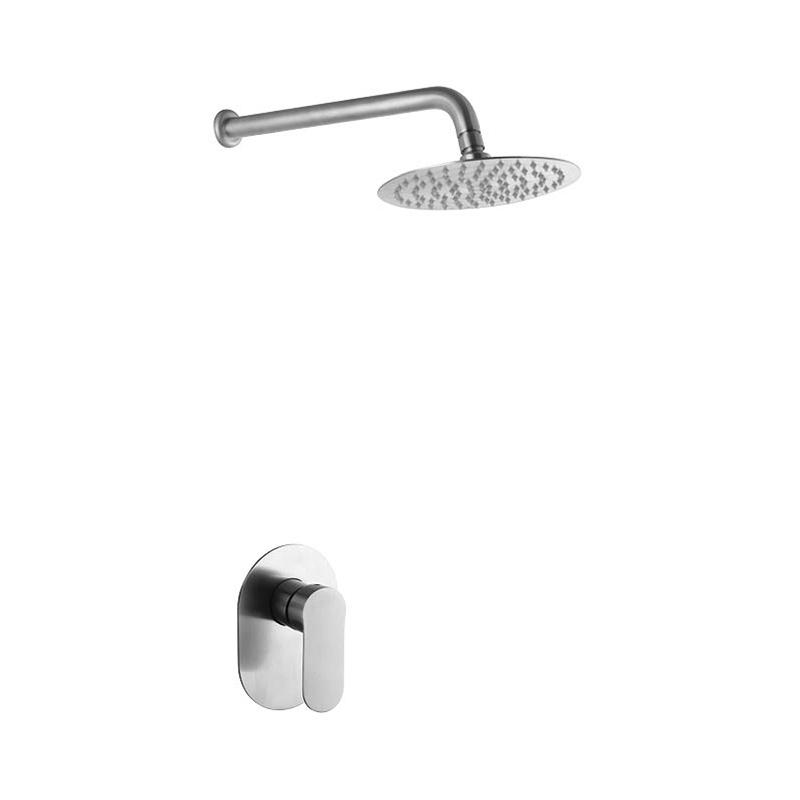
The first thing to check is whether the set is concealed or exposed. This changes the whole way the shower faucet should be identified.
With an exposed set, most of the working parts are visible, so model recognition is often more straightforward. With a concealed set, a lot of the important structure stays behind the wall. That means the visible trim is only part of the answer. The real model is tied to how the mixer body is installed, how the outlets are arranged, and how the controls connect to the hidden valve.
This is one reason concealed systems need a little more care during selection. They look cleaner after installation, but the planning has to be more exact. In project work, that matters a lot. A bathroom may look simple on the surface, but once the rough-in points are fixed, the wrong choice becomes expensive to correct.
A lot of people try to identify a model by color first. Chrome, brushed nickel, matte black, brushed gold, and gunmetal all help narrow the search, but they do not really define the faucet. They only describe the outside.
The more useful clue is the control layout. Is there one handle or more than one? Is there a separate diverter? Is the hand shower paired with an overhead outlet? Does the wall trim sit as a compact plate or as a larger control area?
These details help much more because they point to how the set is meant to work. In real jobs, that matters more than finish. A finish can often be changed across a range, but the internal arrangement usually stays much more specific.
This is also why experienced buyers ask for technical drawings early. A model is easier to identify when the control structure is clear, not when the color is clear.
One common mistake is treating a shower faucet model like a single visible part. In reality, a concealed shower system is usually a group of connected pieces. The mixer, the concealed body, the wall trim, the shower outlet, and the hand shower all belong to the same logic.
If only the front trim is considered, the result is often incomplete. Two sets may look similar from the front and still be different once the in-wall body is checked. That is where replacement problems begin.
This matters even more in renovation work. If an old concealed set is being changed, the visible parts may suggest one direction while the hidden installation points suggest another. That is why installers often need to confirm more than one detail before they call the model correctly.
For project buyers, this is also why a coordinated bathroom tap and shower set is often easier to specify than sourcing separate pieces from different directions. Once the full system is treated as one package, matching becomes much cleaner.
When people say they are trying to determine the model, they are often really trying to determine the valve match. The outer trim may be what they see, but the hidden working body is usually what decides compatibility.
This is one reason the same style can still create ordering mistakes. A handle may look right, the wall plate may look right, but if the internal body is different, the set is not truly a match. In one bathroom, that creates frustration. Across apartments, hotels, or villas, it turns into wasted time and rework.
A better approach is to confirm the installation body, inlet and outlet layout, and general concealed format before thinking about finish. Once the working structure is clear, the visual selection becomes much easier.
In larger projects, buyers are not just identifying one shower. They are trying to build repeatability. They want something that can be installed room after room without confusion. They want fewer replacement problems later. They want a line that can be explained clearly to contractors and procurement teams.
This is why many buyers now prefer shower programs that are easier to repeat rather than mixing too many unrelated models. A cleaner concealed range gives more control over supply, finish consistency, and installation planning.
That also makes life easier for distributors. A product line is easier to sell when the technical logic is stable and the visible style can still be adapted for different market levels.
Once the structure is confirmed, material and finish become important again. This is the point where the practical match is already under control, and the visual match begins to matter more.
Stainless steel and brass remain common in this category because buyers want a concealed set that feels dependable over time, not only good-looking on installation day. Finish choice then helps place the product into different market styles. A warmer brushed tone may suit one project. Matte black may fit another. Chrome may still work where a cleaner classic look is preferred.
For B-end buyers, this is where planning becomes more strategic. One concealed structure offered in multiple finishes is often more useful than too many unrelated bodies with no consistent logic behind them.
Homeowners usually ask how to determine a shower faucet model when they need a replacement. Project buyers ask much earlier. They ask before the order is placed, because once concealed parts go into the wall, changing direction gets harder.
A developer wants fewer surprises during installation. A hotel buyer wants room-to-room consistency. A distributor wants a line that can be repeated cleanly. A contractor wants fewer fitting issues on site. In all of these cases, identifying the right model early is not a small technical detail. It is part of keeping the whole job under control.
This is also where supplier support starts to matter. Some buyers need finish coordination. Some need logo customization. Some need a broader range that works across several channels. That is where OEM and ODM support become useful, not as decoration, but as a way to keep the product line closer to the market.
The easiest concealed shower systems to manage are usually the ones that were planned clearly from the start. When the installation type is obvious, the control layout makes sense, and the full set is specified as one system, there is much less guesswork later.
That helps in procurement, installation, maintenance, and future replacement. It also gives buyers more confidence when they need repeat orders instead of one-off purchasing.
In practice, a model that is easier to identify is usually also easier to sell, easier to install, and easier to support after delivery.
So, how to determine shower faucet model in a practical way? Start with the installation type, then look at the control layout, the concealed structure, and the full shower system instead of judging by finish alone. Once the set is treated as one complete unit, the model usually becomes much clearer.
That is why many buyers now prefer concealed shower ranges that are easier to specify, easier to repeat, and easier to match across projects. If you are sourcing for a hotel, apartment development, villa project, showroom line, or distribution program, and you need a supplier that can support repeat orders together with OEM or ODM cooperation, send us your finish preference, quantity, or project details. We can help you sort out a more suitable solution for your market.
Previous:
 Mobile Phone:
 Contact Now