

A pull down kitchen faucet can still look perfect on the outside while the water flow slowly gets worse. The stream becomes uneven, splashing increases, and the pressure feels weaker than before. In many cases, the faucet itself is not the problem. The aerator is. This small part at the spray outlet often collects mineral scale, sand, and fine debris over time, especially in kitchens where the faucet is used many times every day.
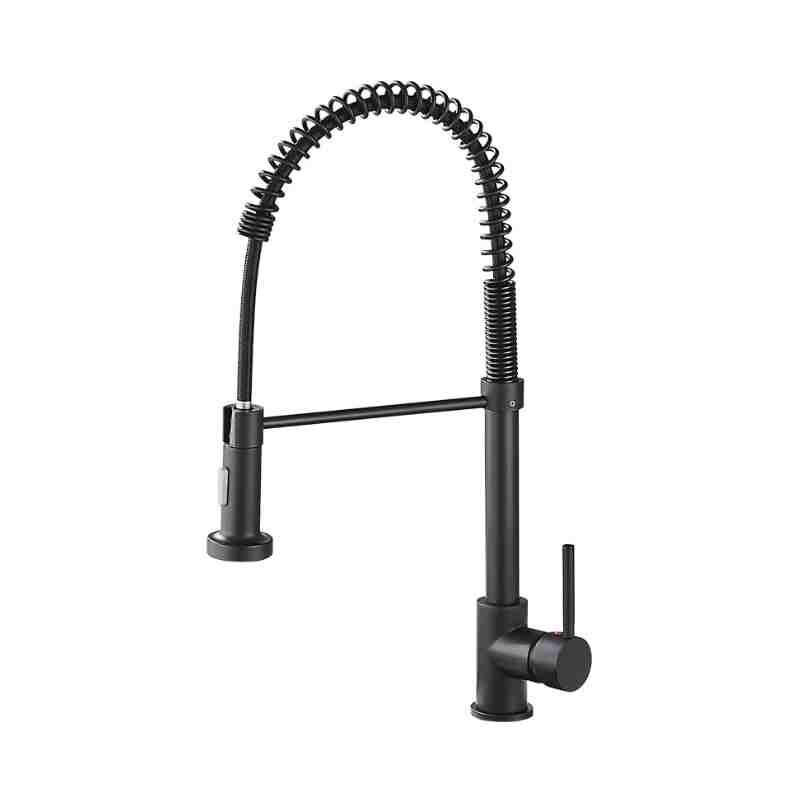
Cleaning the aerator on a pull down kitchen faucet is usually one of the simplest ways to restore better performance. But for contractors, distributors, and project buyers, this topic goes beyond basic maintenance. It also raises a more important question: is the faucet designed in a way that makes routine service practical, and can the product keep stable performance in long-term use? That is where a commercial style pull down kitchen faucet becomes more relevant, because buyers are often comparing not only appearance, but also cleaning convenience, durability, and after-sales workload. Our product fits naturally into this discussion because it combines a pull down spray design, spring retraction, rotating spout options, customized aerator choices, and commercial-style construction aimed at modern kitchen use.
The aerator sits at the point where water leaves the faucet, so it is constantly exposed to whatever is in the water supply. In homes with hard water, mineral deposits can build up quickly. In renovation projects or new installations, fine debris from pipes may also reach the outlet. Once these particles collect around the aerator mesh or flow-shaping parts, the water stream becomes less controlled. Instead of a clean flow, users may notice side spray, bubbling, or reduced output.
On a pull down kitchen faucet, this issue can become more noticeable because the spray head is used for many tasks in different directions. A faucet that rinses vegetables, fills pots, cleans the sink, and sprays the work area naturally handles more frequent movement and more contact with splashing water than a simpler fixed spout. Our commercial style pull down kitchen faucet is built around this kind of daily use, with a spring-loaded retractable spray head, a stretchable hose around 50 centimeters, and a high-arc form designed for broader sink coverage. Those features improve usability, but they also make routine aerator care an important part of keeping performance consistent.
A clogged aerator usually gives warning signs before the problem becomes serious. The first sign is often weaker water pressure at the spray outlet even though the supply line has not changed. Another common sign is an uneven pattern, where the water stream breaks apart or sprays sideways. Some users also notice that the faucet suddenly feels less efficient for basic tasks like rinsing dishes or filling a container. :contentReference[oaicite:4]{index=4}
For project managers and kitchen fixture buyers, these symptoms matter because they influence how the end user judges the whole faucet. A product may still be structurally sound, but if the outlet feels inconsistent, complaints start quickly. In commercial kitchens, apartments, and rental properties, that can translate into unnecessary service visits. This is one reason many B2B customers prefer a faucet platform that supports clearer maintenance routines and stable component quality across large orders. Our product is positioned for kitchen, farmhouse, apartment, and RV use, which already suggests a broader range of end-user environments and maintenance expectations.
The cleaning process usually starts by removing the aerator from the spray outlet carefully, making sure the finish and threads are not damaged. Once removed, the aerator can be rinsed and soaked to loosen mineral buildup. A soft brush or similar non-abrasive cleaning method is usually enough to remove scale and trapped particles from the mesh and inner parts. After that, the components should be reassembled correctly so the water flow returns to its intended pattern.
The key is to clean the aerator gently and fully rather than forcing debris deeper into the outlet. On a pull down faucet, users often focus only on the visible spray face, but a proper clean should include the internal aerator parts where scale and residue tend to collect. This is why product design matters. A faucet that offers a consistent outlet structure and reliable component fit is easier to maintain over time. Our commercial style pull down kitchen faucet is specified with aerator options based on customer requirements, which is especially useful for wholesale buyers and project customers who need to align outlet performance with different market demands.
A standard faucet can often hide small performance issues for a while. A pull down kitchen faucet cannot. Because users move the spray head around the sink and rely on it for more precise rinsing, they notice changes in stream quality much faster. A blocked aerator affects not only pressure but also cleaning efficiency. When the outlet becomes irregular, more water is wasted and the user has less control over where the stream goes.
This matters even more in commercial-style faucets, where the product is often chosen for flexibility and speed. Our faucet offers a single-handle design, rotatable spout options up to 180 or 360 degrees, spring retraction, and different outlet modes described as stronger concentrated flow and softer diffuse flow. Those are practical advantages only when the aerator and outlet components remain clean enough to perform as intended. In other words, the better the faucet function, the more noticeable a neglected aerator becomes.
For individual users, cleaning the aerator solves an immediate problem. For importers, wholesalers, and kitchen fixture suppliers, the bigger issue is repeat maintenance. If a faucet line frequently develops outlet complaints, even simple ones, the after-sales burden grows quickly. That is why experienced buyers do not look only at whether the aerator can be cleaned. They also look at material quality, component stability, testing standards, and whether the supplier can support different market requirements for flow rate and outlet design.
Our product gives buyers more flexibility on that side. The product page lists aerator choice and cartridge material as customer-based requirements, with laser logo customization available on the handle or body. It also shows pressure testing at 0.6 MPa air pressure and 1.0 MPa water pressure, a 24-hour salt spray test result, and cartridge life rated at 500,000 cycles. These details matter because they help buyers evaluate not only style but also long-term reliability and customization potential in bulk supply.
Aerator maintenance is a small task, but the surrounding faucet construction still affects the overall ownership experience. A faucet that resists corrosion better is more likely to keep its outlet area clean and serviceable over time. According to the product page, this faucet uses SUS304 stainless steel and DR brass in its material setup, and it is offered in several finish options including brushed, chrome, brushed nickel, matte black, gunmetal, rose gold, brushed rose gold, brushed gold, and gold. The matte black version is described as having a coating thickness of about 3 to 5 microns, with added wear resistance and fingerprint resistance.
For B2B customers, this is not only a style discussion. Finish quality affects cleaning frequency, visible staining, and customer satisfaction after installation. A faucet that looks better for longer is easier to support in apartments, hospitality projects, and premium residential lines. It also helps distributors build a more competitive catalog because surface choice is often one of the first filters buyers use when comparing kitchen faucet options.
When a faucet has to serve both performance and visual goals, commercial-style pull down models often stand out. The high-arc shape, spring-supported hose, and larger work range make the product easier to explain to buyers who want more flexibility around the sink. Our model is described as a modern commercial-style faucet with black matte treatment, industrial lines, and a retractable spray head that returns smoothly to its original position. It is also marketed for home kitchens, commercial kitchens, villas, apartments, outdoor kitchens, and RV use, which shows how broad the product positioning can be.
For suppliers and project buyers, this kind of versatility helps reduce SKU pressure. One well-developed faucet platform can often serve multiple customer groups with finish or branding changes. That is a stronger long-term business proposition than a faucet that works only in one narrow setting.
So, how do you clean the aerator on a pull down kitchen faucet? In simple terms, you remove the aerator carefully, clear the mineral buildup and trapped debris, rinse the parts thoroughly, and reinstall them correctly so the spray pattern and pressure return to normal. But the bigger takeaway is that aerator cleaning is not just a user task. It is also part of how a faucet proves its long-term practicality.
Our commercial style pull down kitchen faucet fits well into that bigger picture. It combines a pull down spring spray design, rotating spout options, customer-based aerator selection, multiple finishes, and project-friendly customization support. For distributors, importers, wholesalers, and OEM or ODM buyers, that makes it easier to offer a faucet that is not only attractive on display, but also more workable in real kitchen use.
If you are comparing pull down kitchen faucet options for your market, a private label line, or a bulk project program, feel free to contact us. We can help you review suitable finishes, outlet configurations, logo details, and product matching suggestions so you can choose a faucet solution that is easier to maintain and easier to sell.
 Mobile Phone:
 Contact Now